


Gourmandise sucré
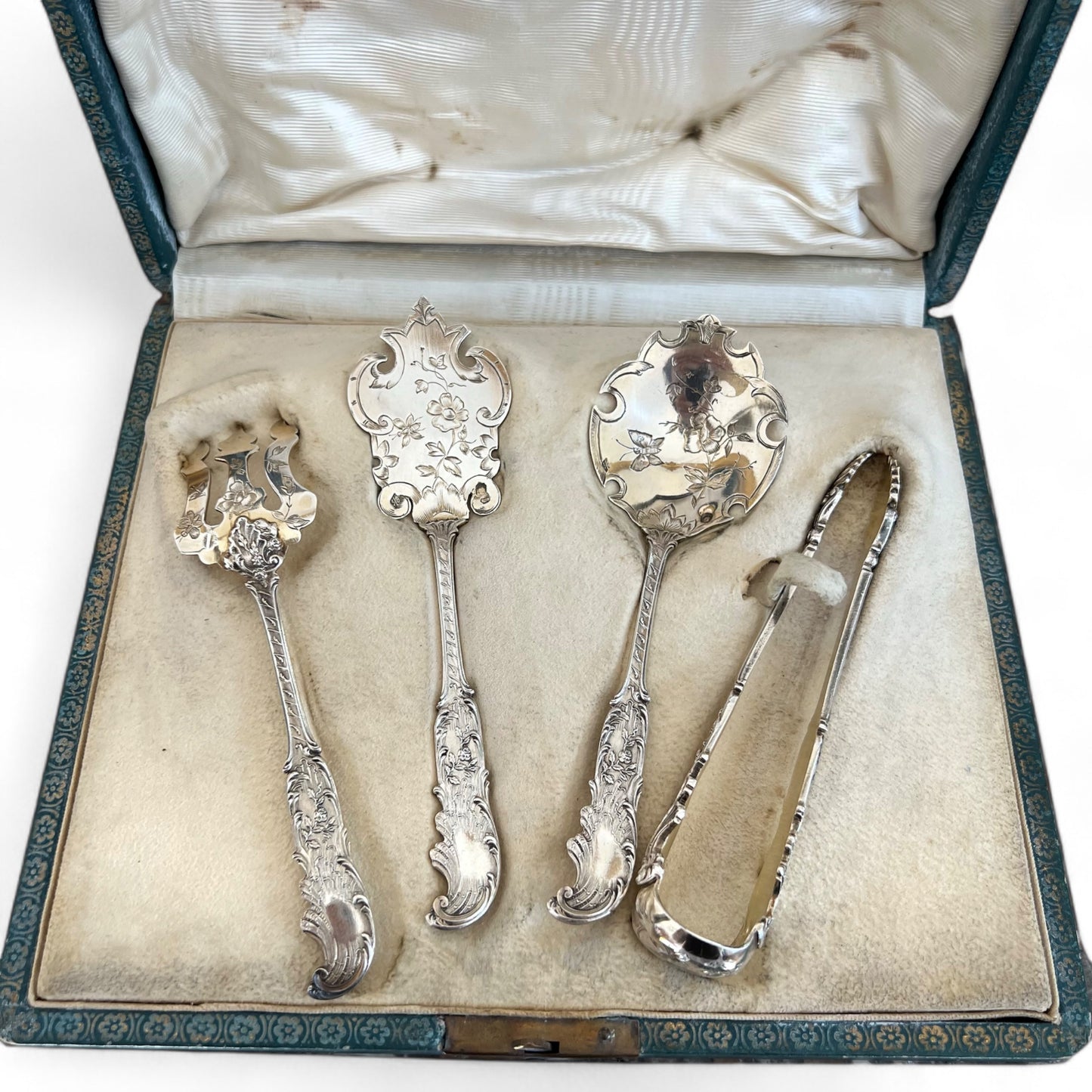
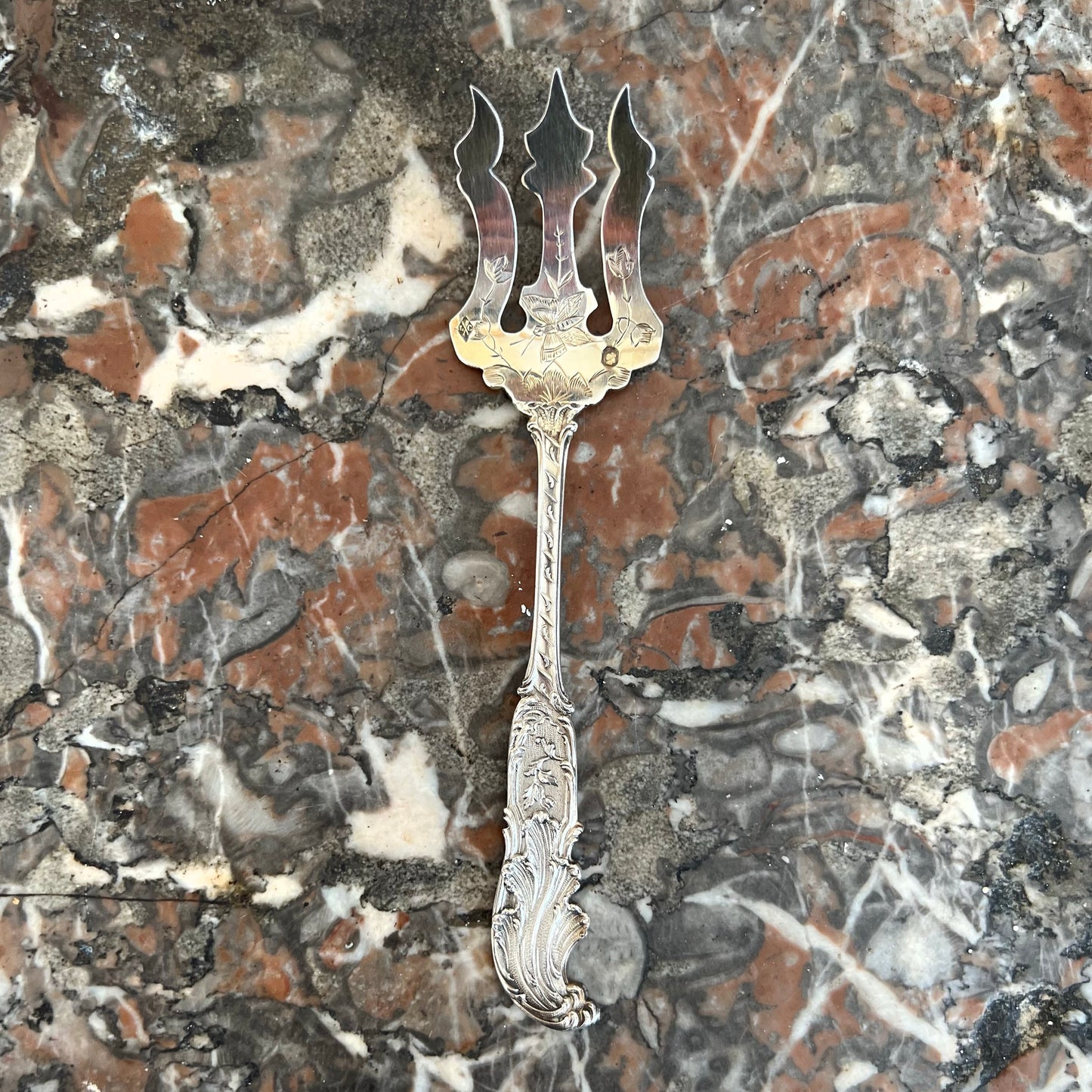
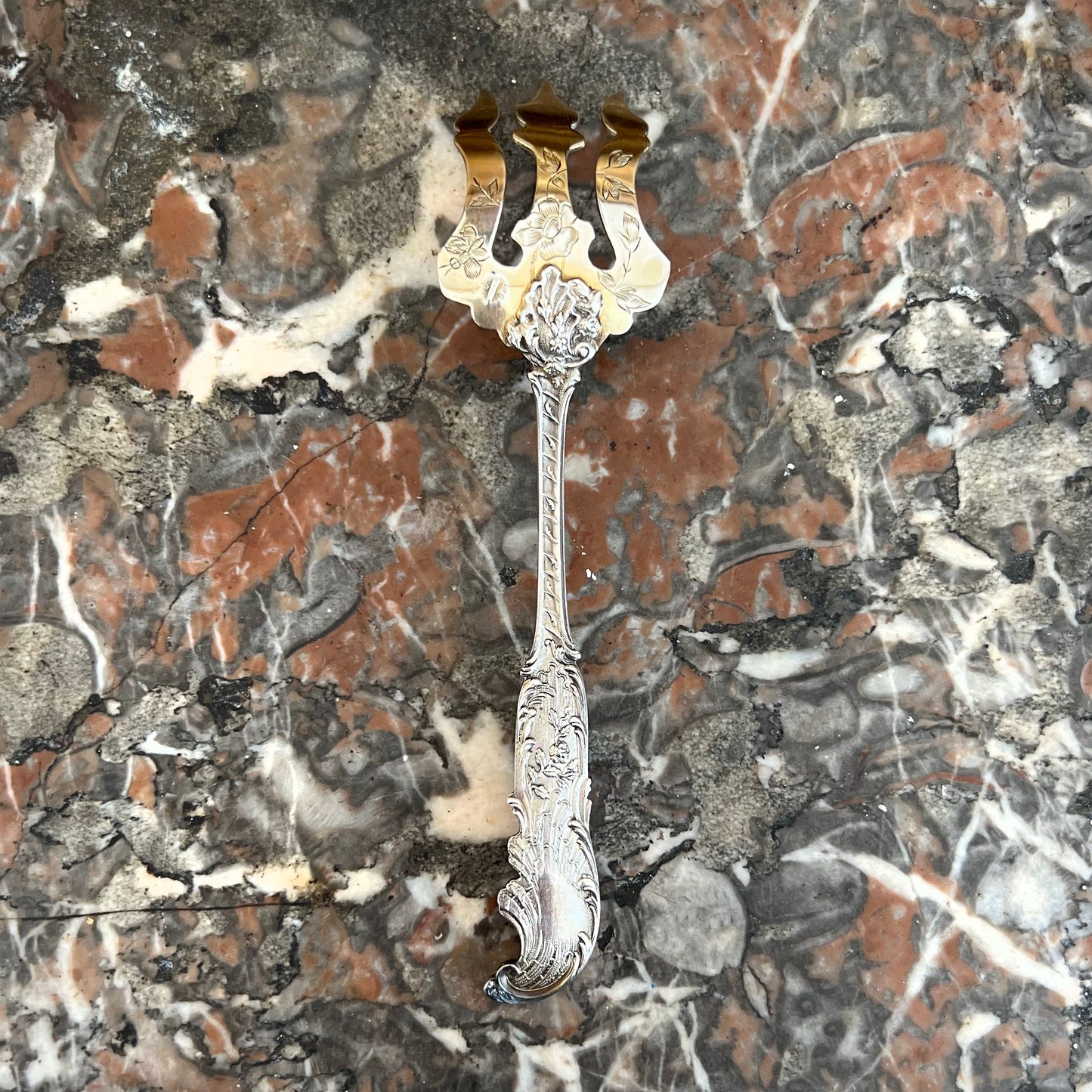
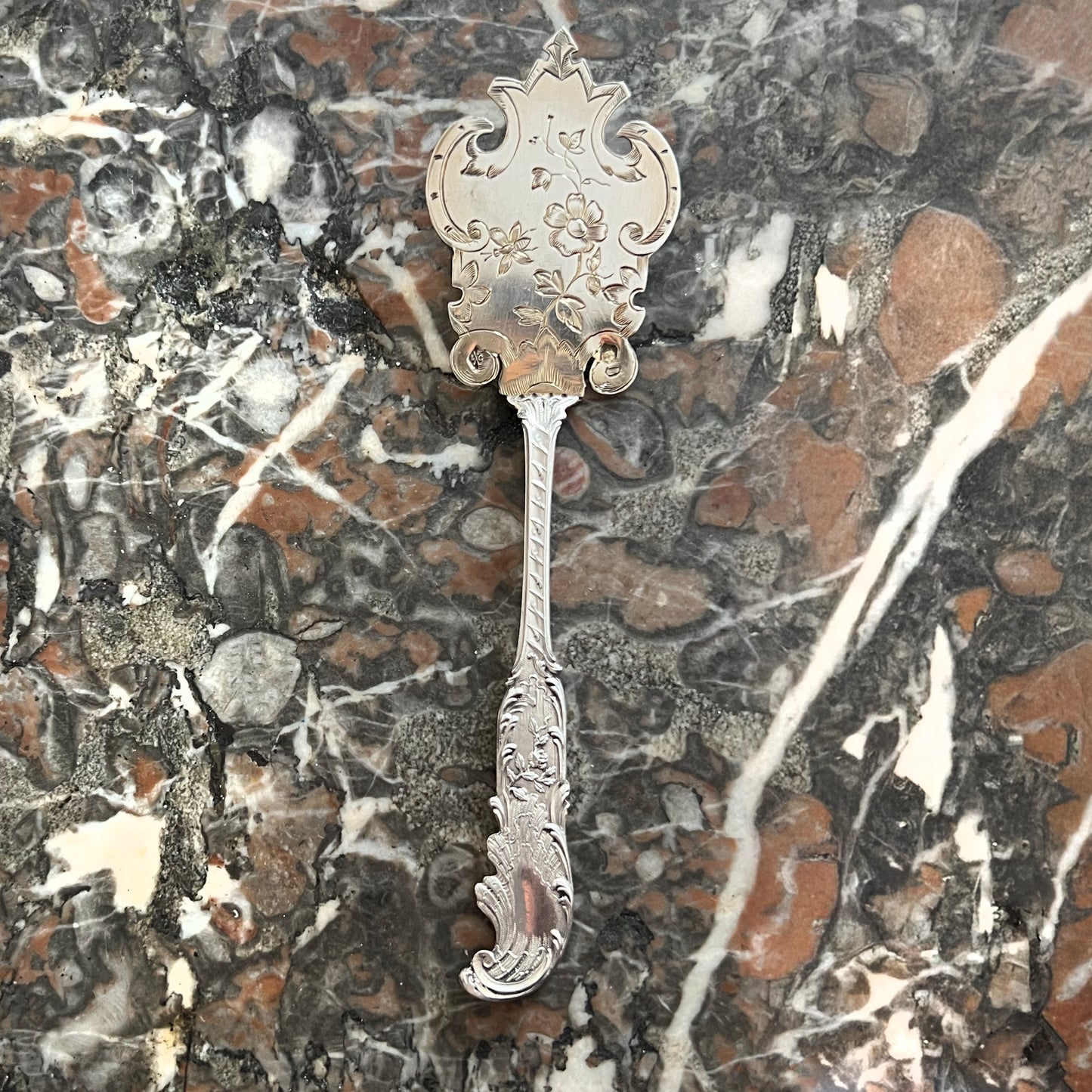
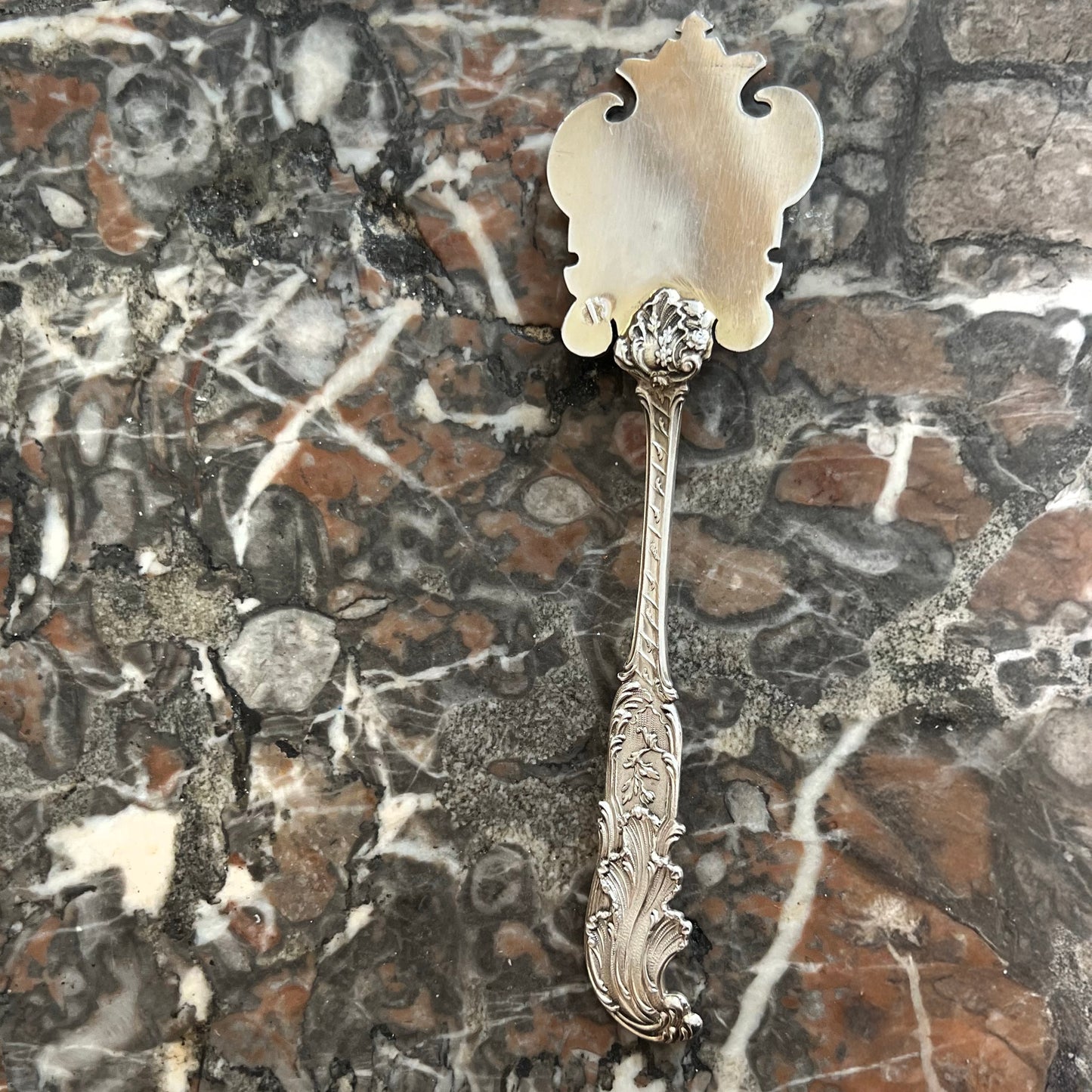
Butterfly candied fruit service, in solid silver & vermeil, Louis Coignet
Butterfly candied fruit service, in solid silver & vermeil, Louis Coignet
ARGENT MASSIF & VERMEIL
Maitre orfèvre :L. Coignet
From the Art Nouveau period, we're captivated by the goldsmith's meticulous craftsmanship in the creation of each piece! 🦋🌷
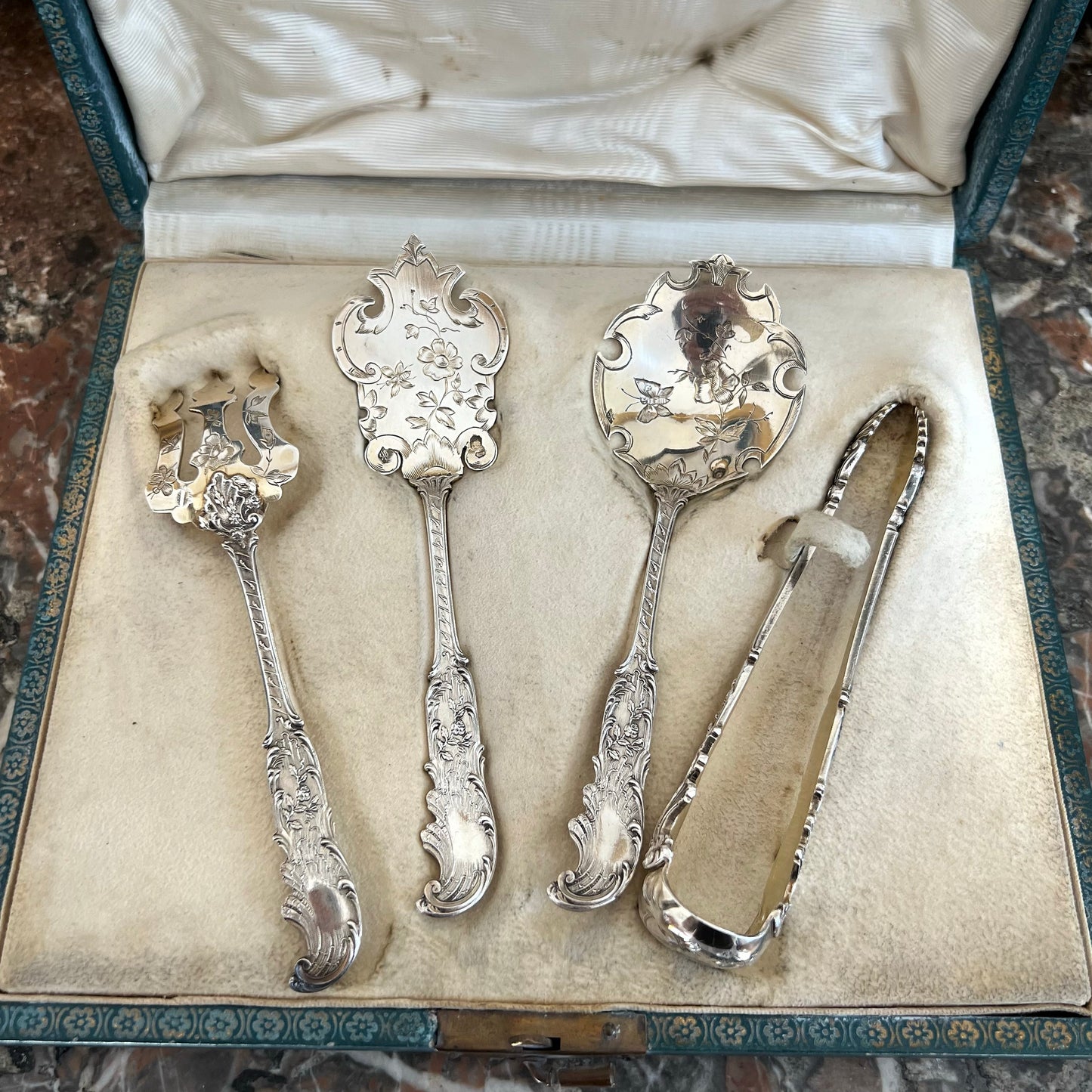
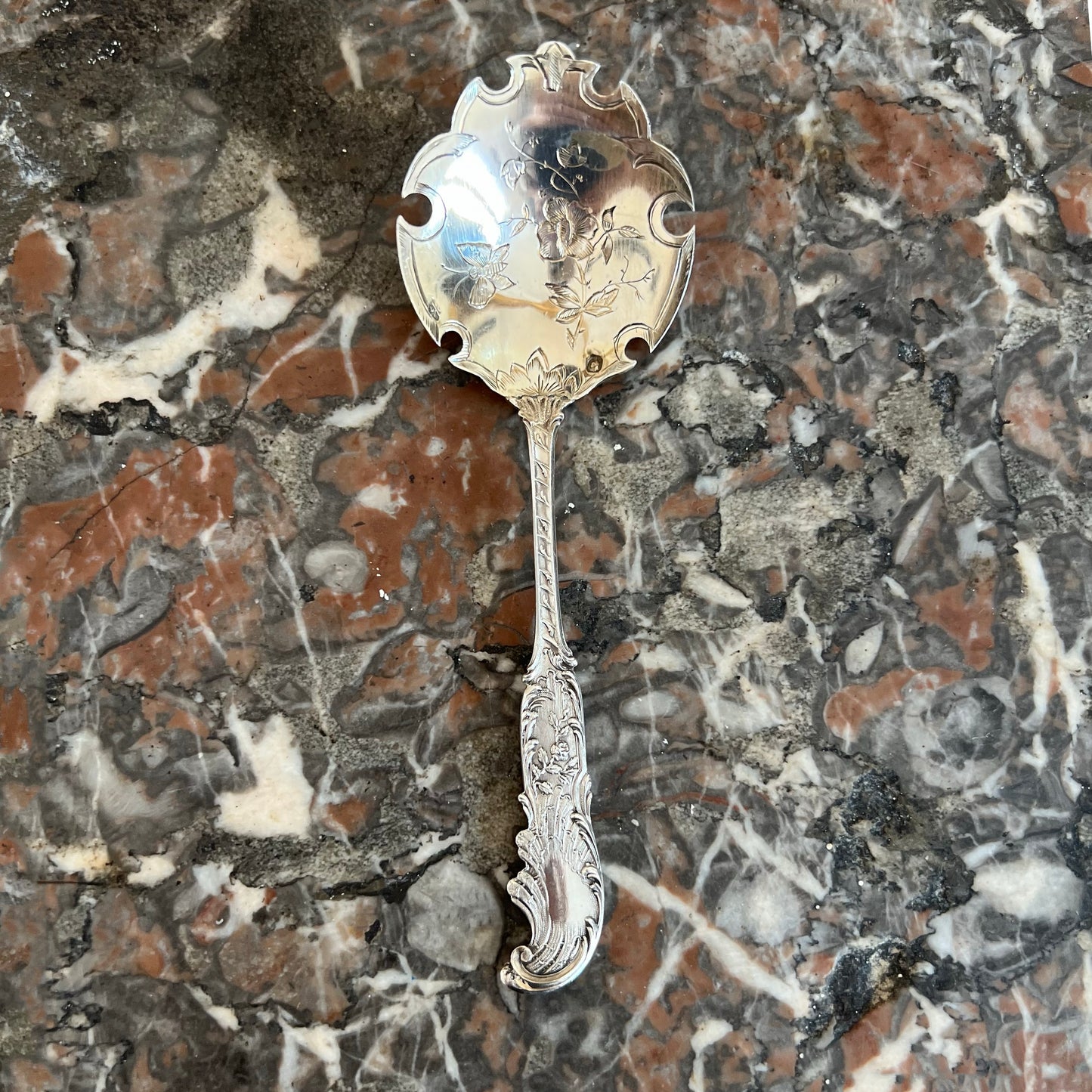
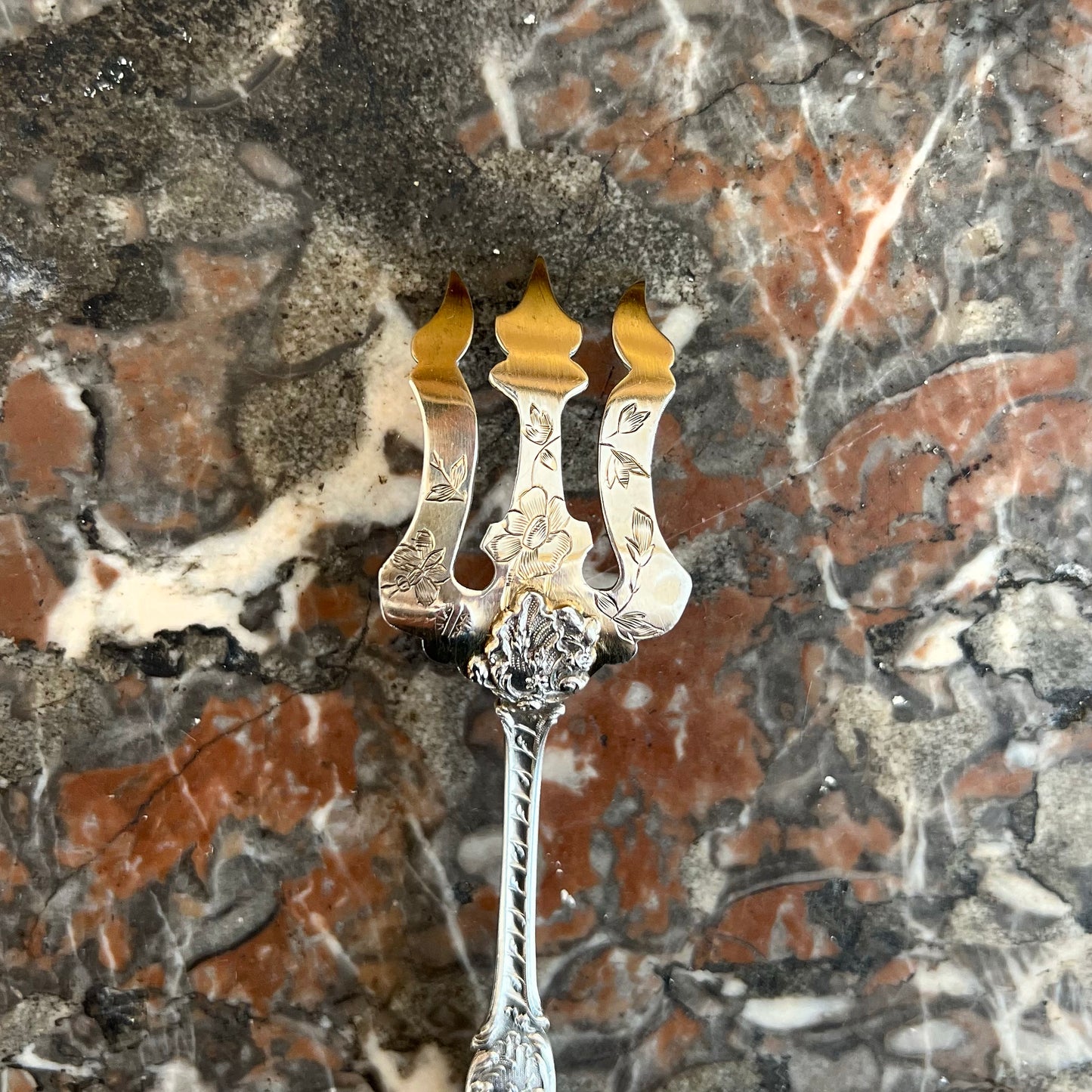
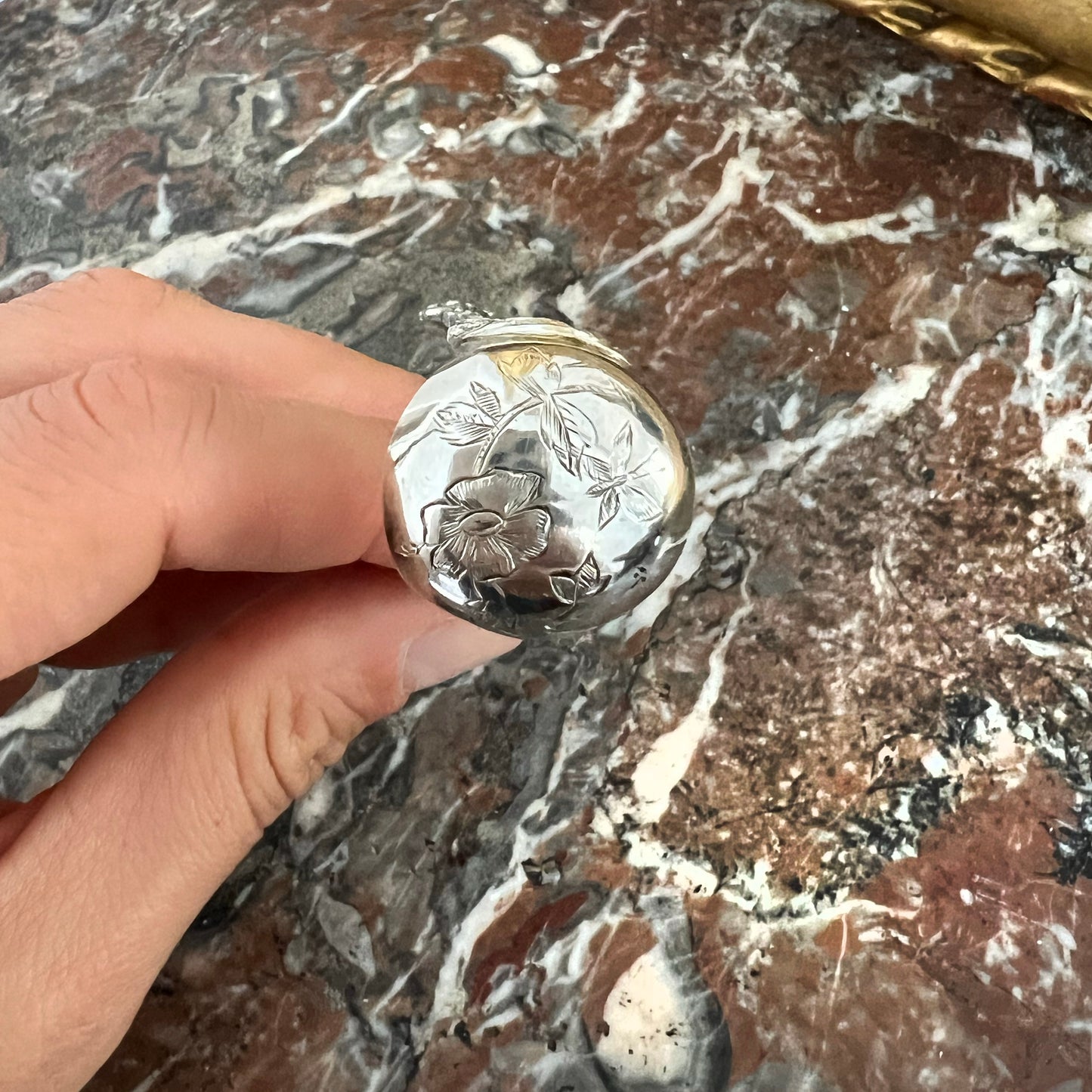
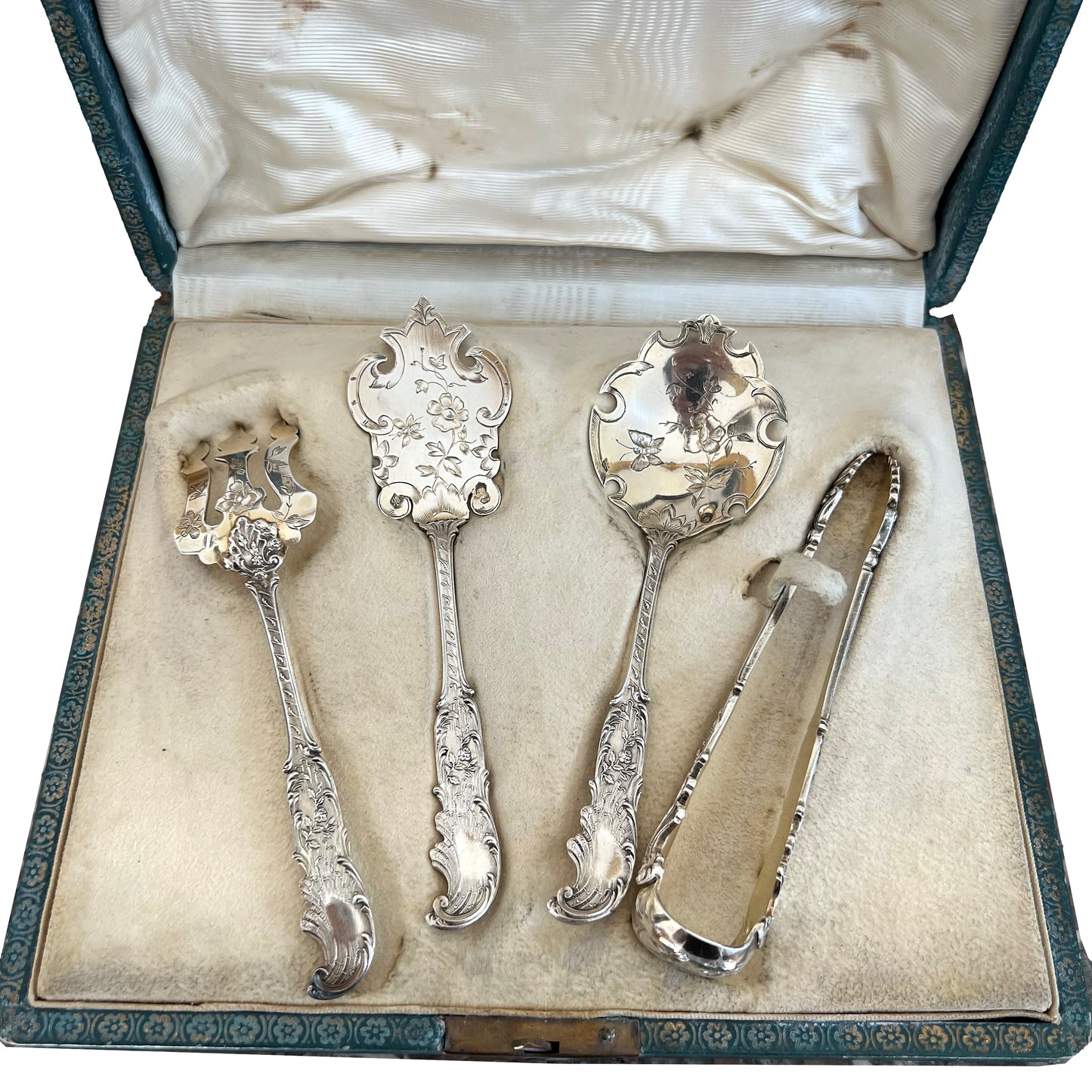
A delightful petit four service, also known as a candied fruit service, in solid silver and formerly vermeiled, which was made by Louis Coignet between 1889 and 1893.
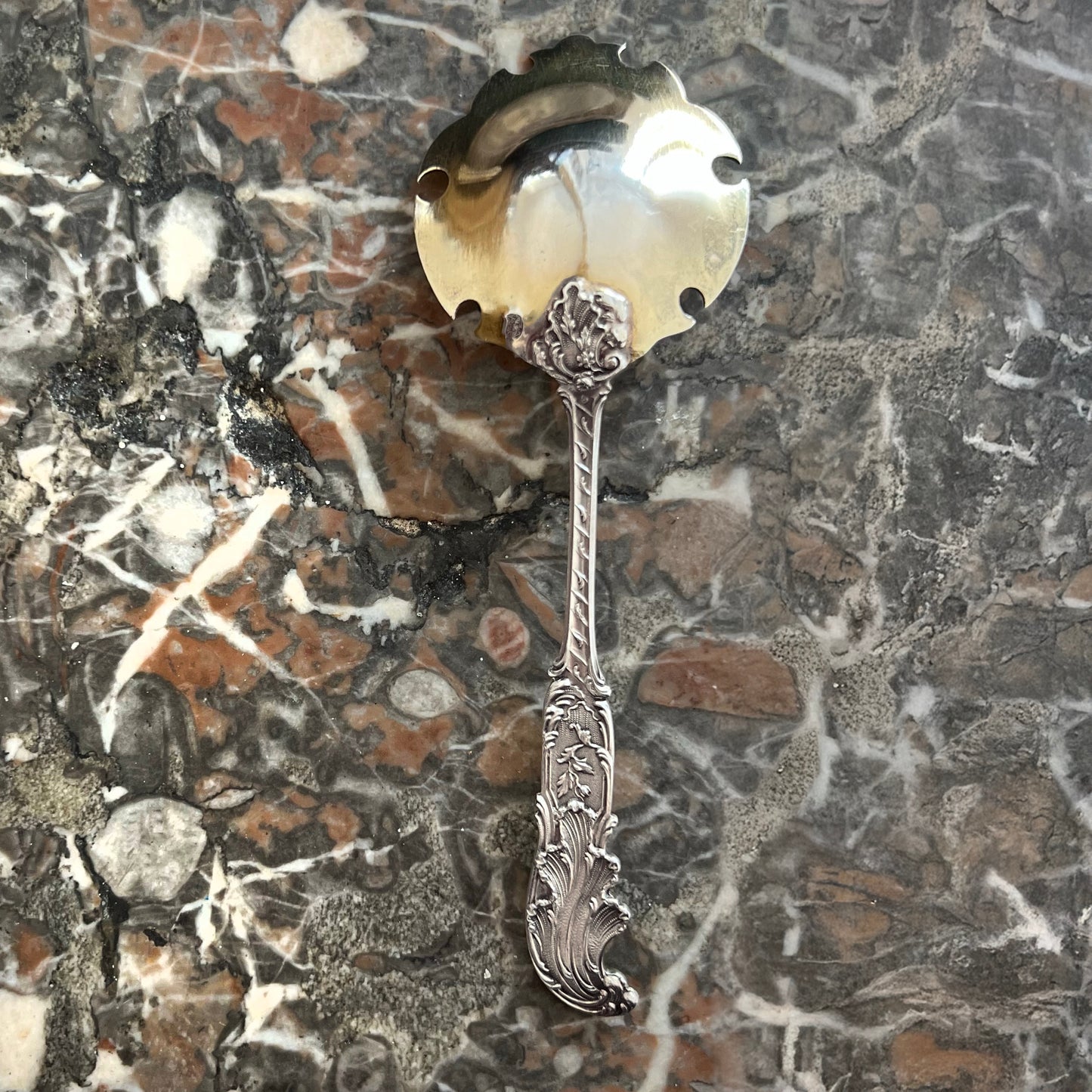
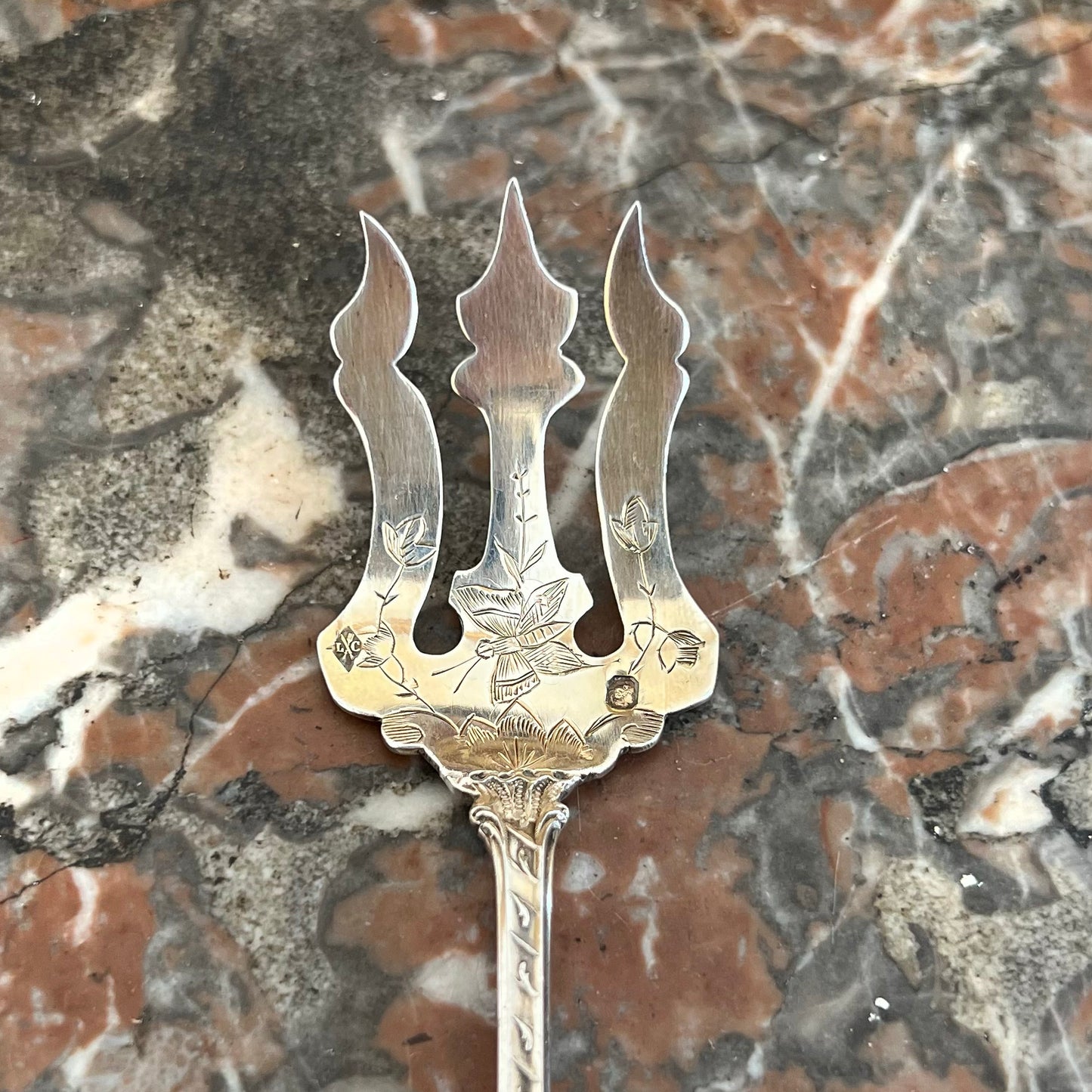
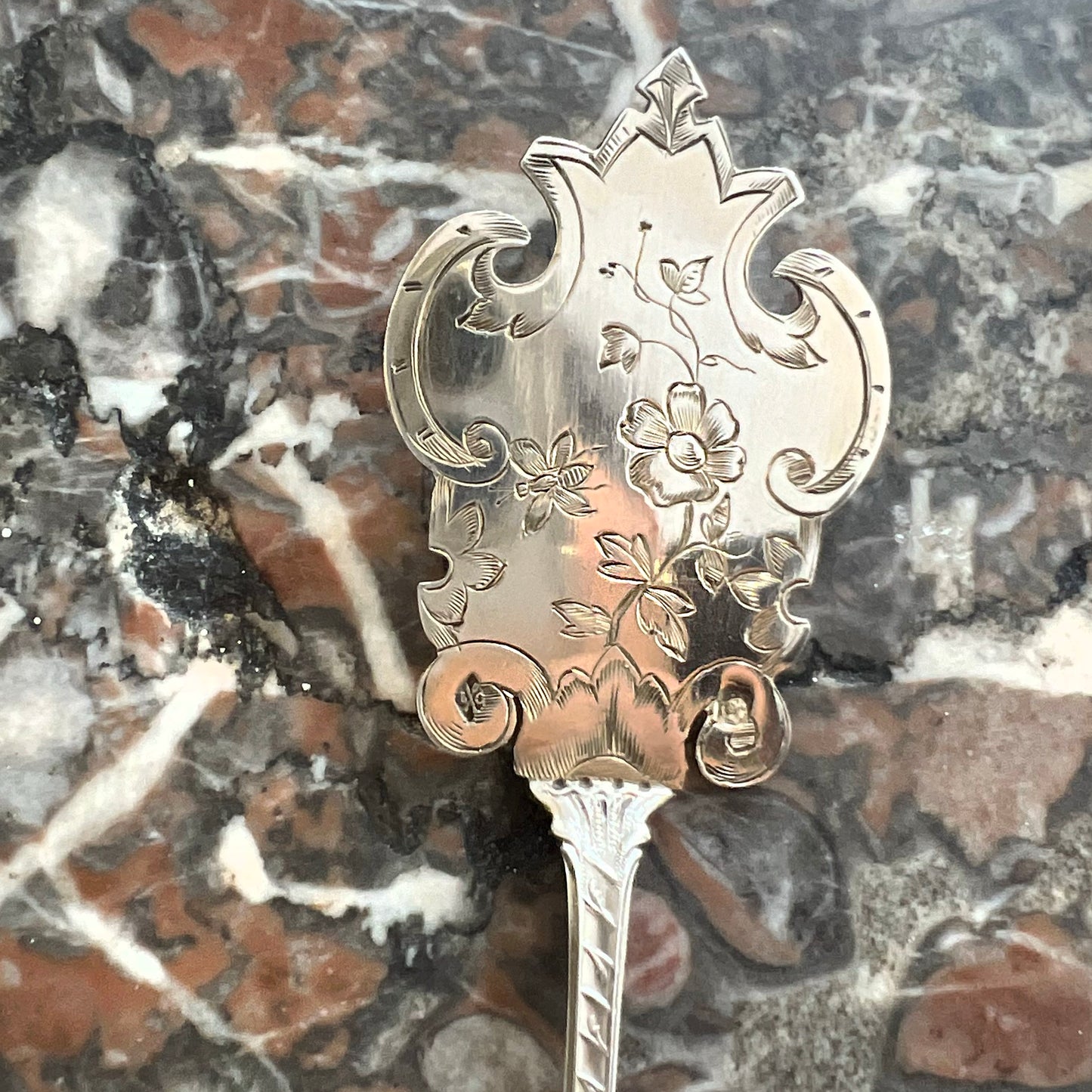
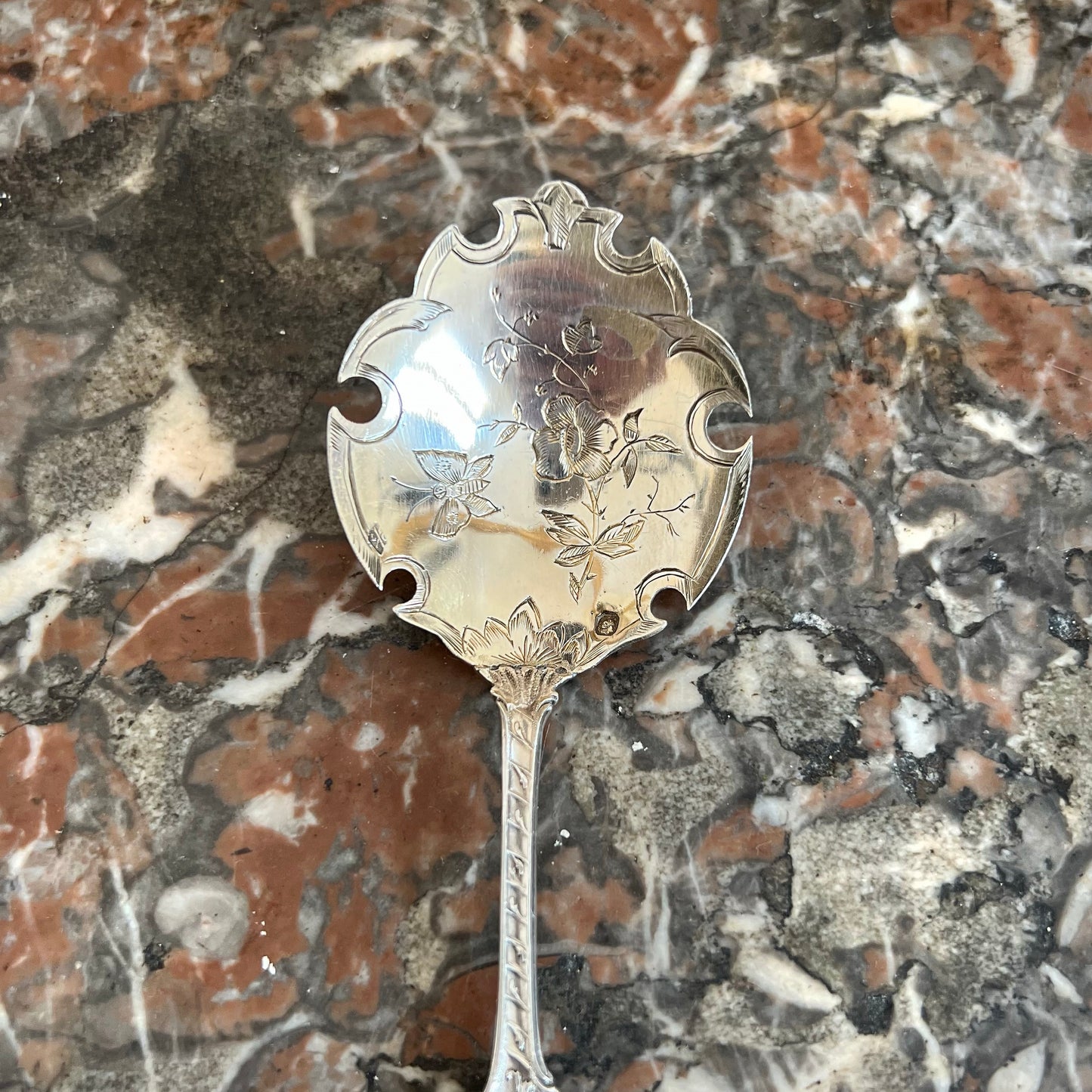
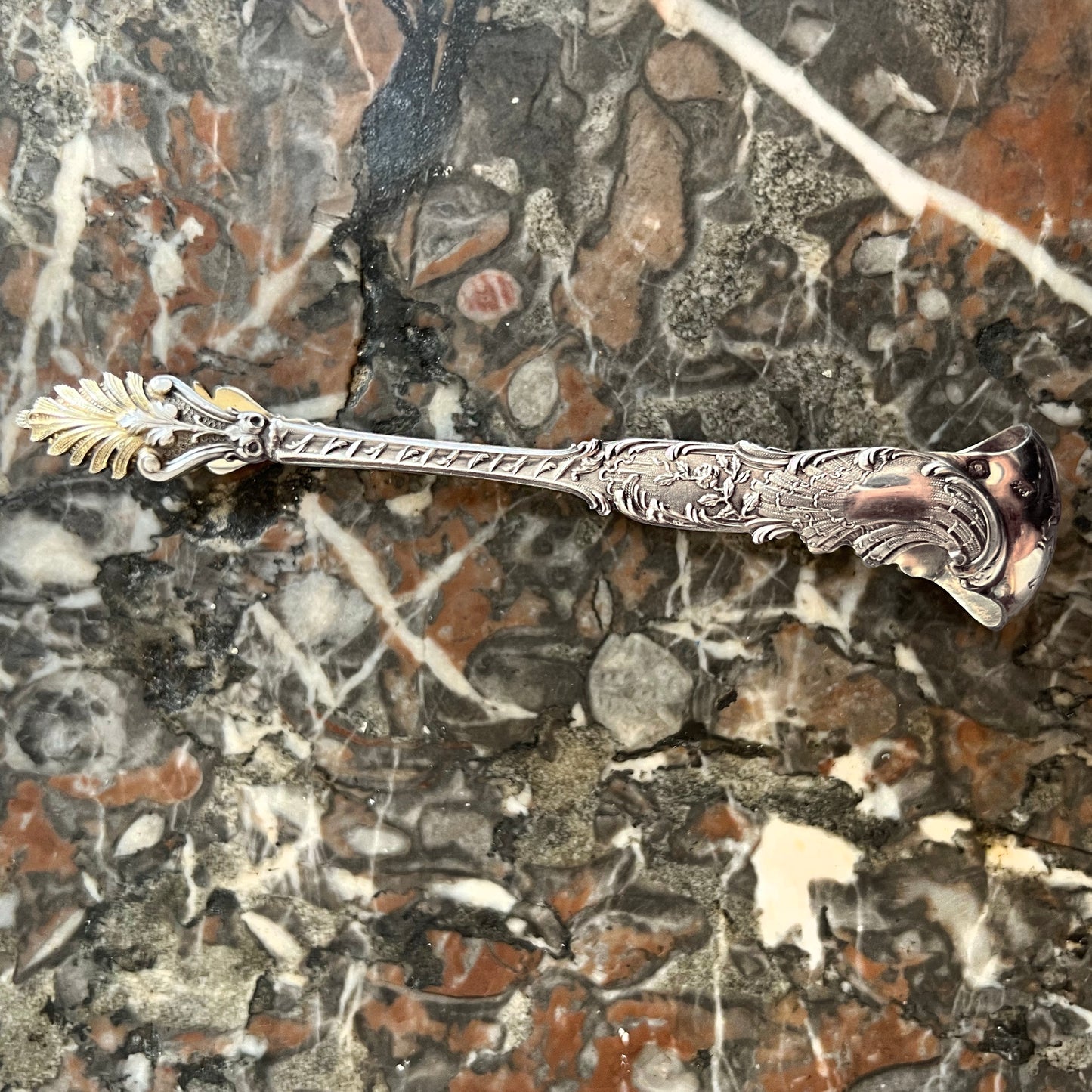
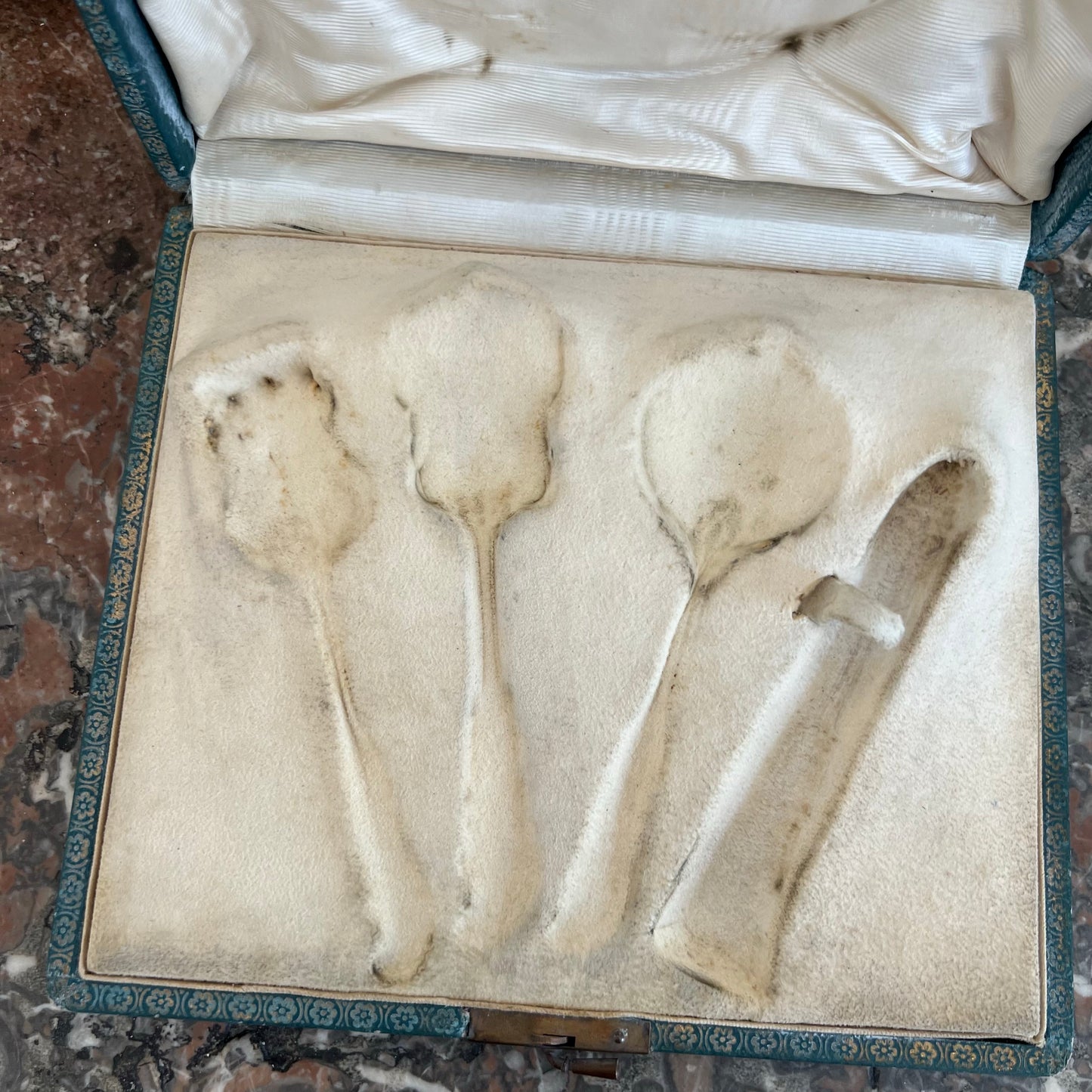
From the Art Nouveau period, this service consists of a sugar or candied chestnut tong, a jam spoon, a confectionery fork and a fondant or petit four shovel.
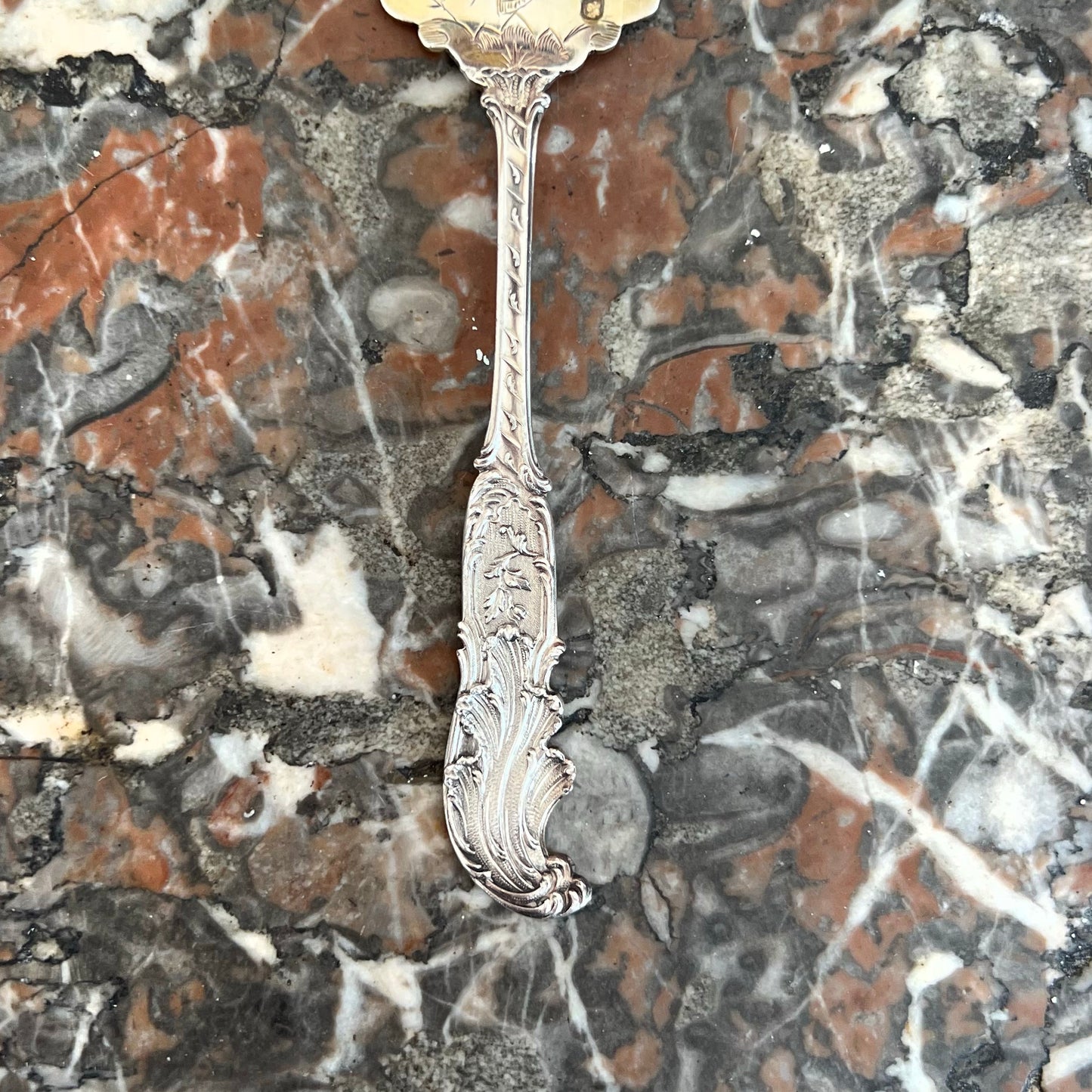
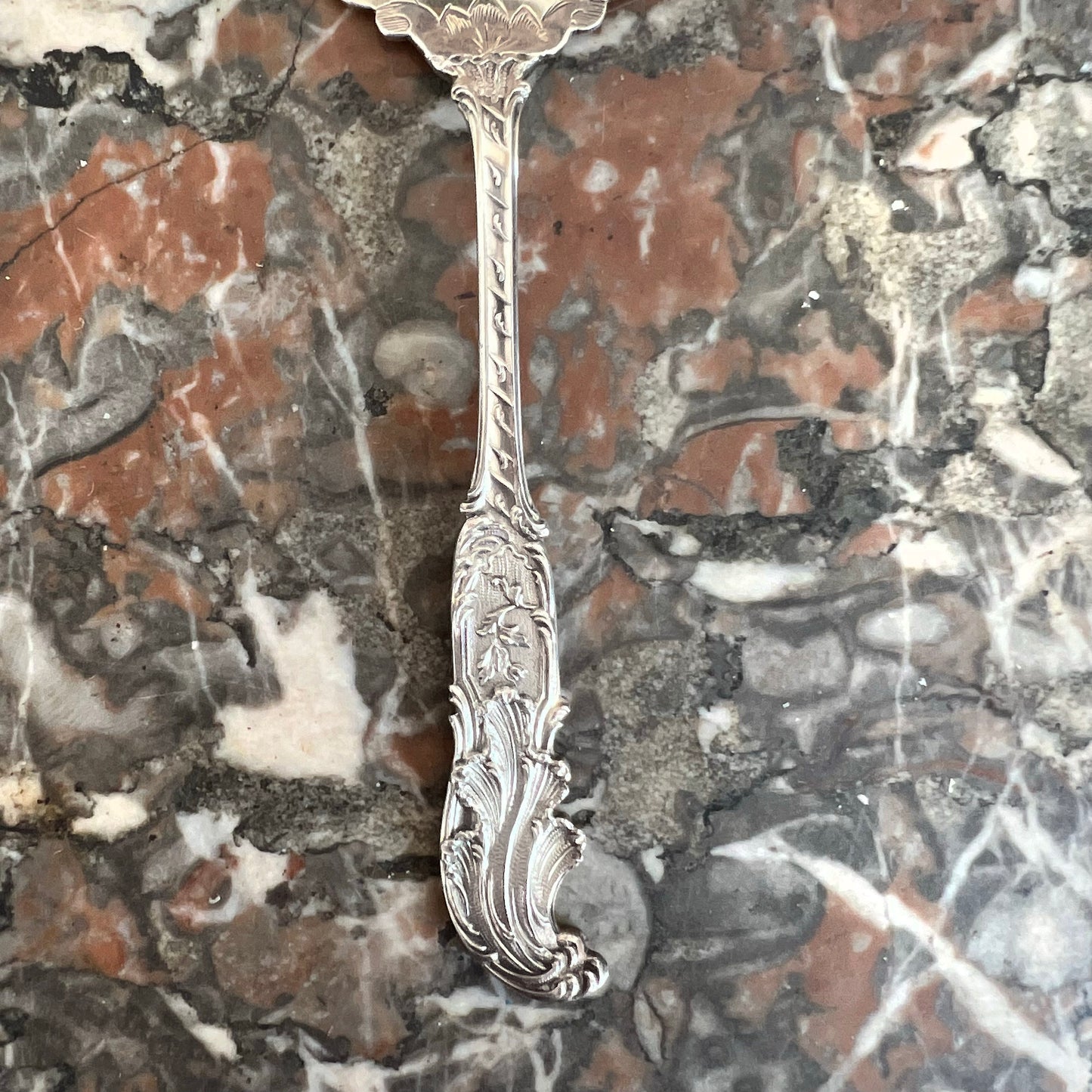
In the Rococo style, the handles are adorned with scrolling foliage, and the spatulas play with curves and counter-curves, lending a lightness and refinement that invites the savoring of the small bites served. The butterflies, bees, and spring motifs chiseled on the fork, the bowl, and the (formerly vermeil) handle complete this quintessence of beauty.
A magnificent service, showcasing the richness of the goldsmith's craftsmanship!
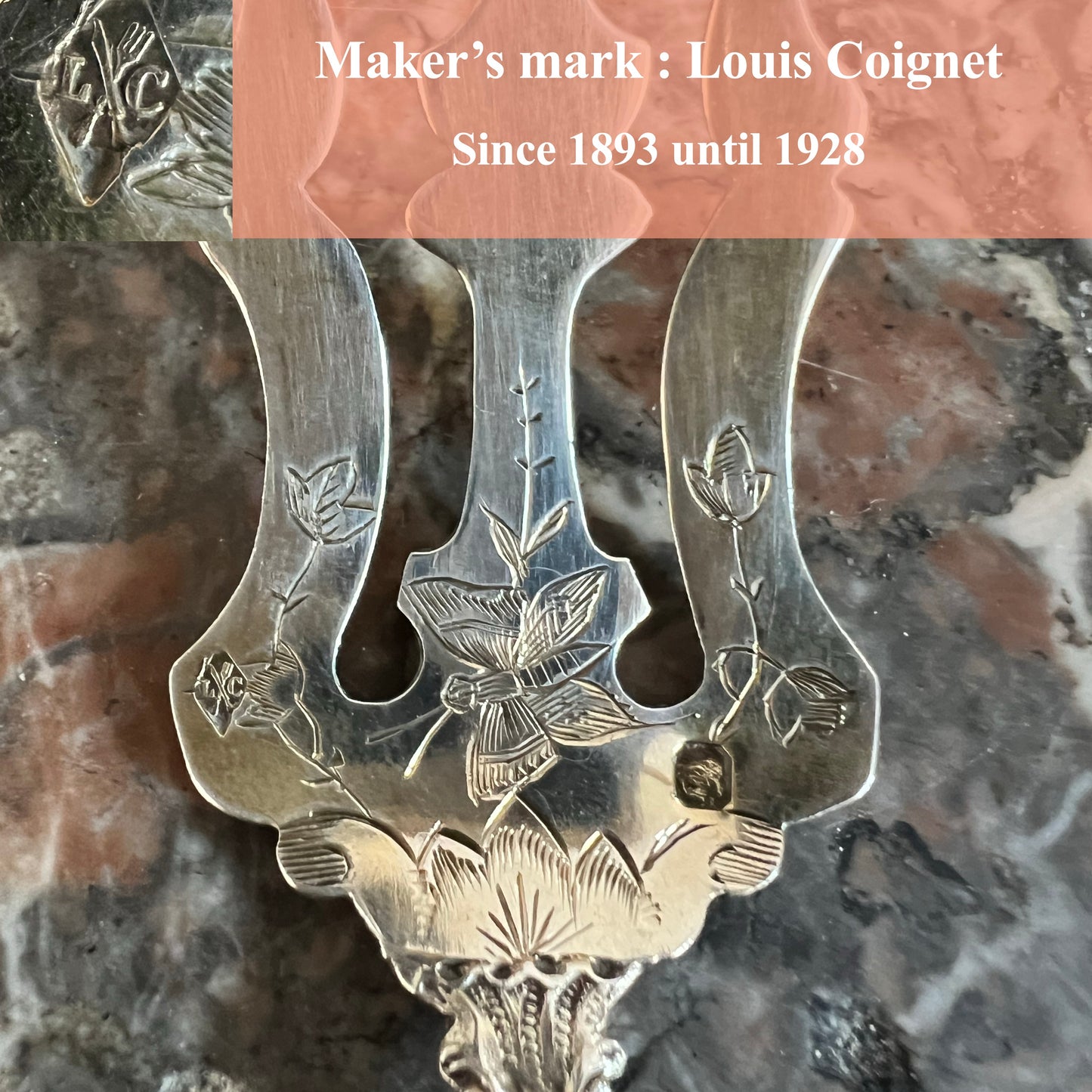
Goldsmith's hallmark and standard hallmark on the top of the shovel, fork, spoon and on the side of the sugar tongs.
Hallmark: Minerva hallmark, 1st standard (Arg 925)
Master silversmith: Louis Coignet (1889-1893) LC and a carving service
He registered his hallmark in 1889 and cancelled it in 1893. Louis Coignet took over the workshop of his father, Charles-Alfred Coignet.
Weight & Dimensions:
Weight: 97 gr.
Sugar tongs length: 11cm.
Length of fork, scoop and spoon: 13.5cm.
Condition:
Minor scratches due to age and time, the vermeil is almost completely gone.
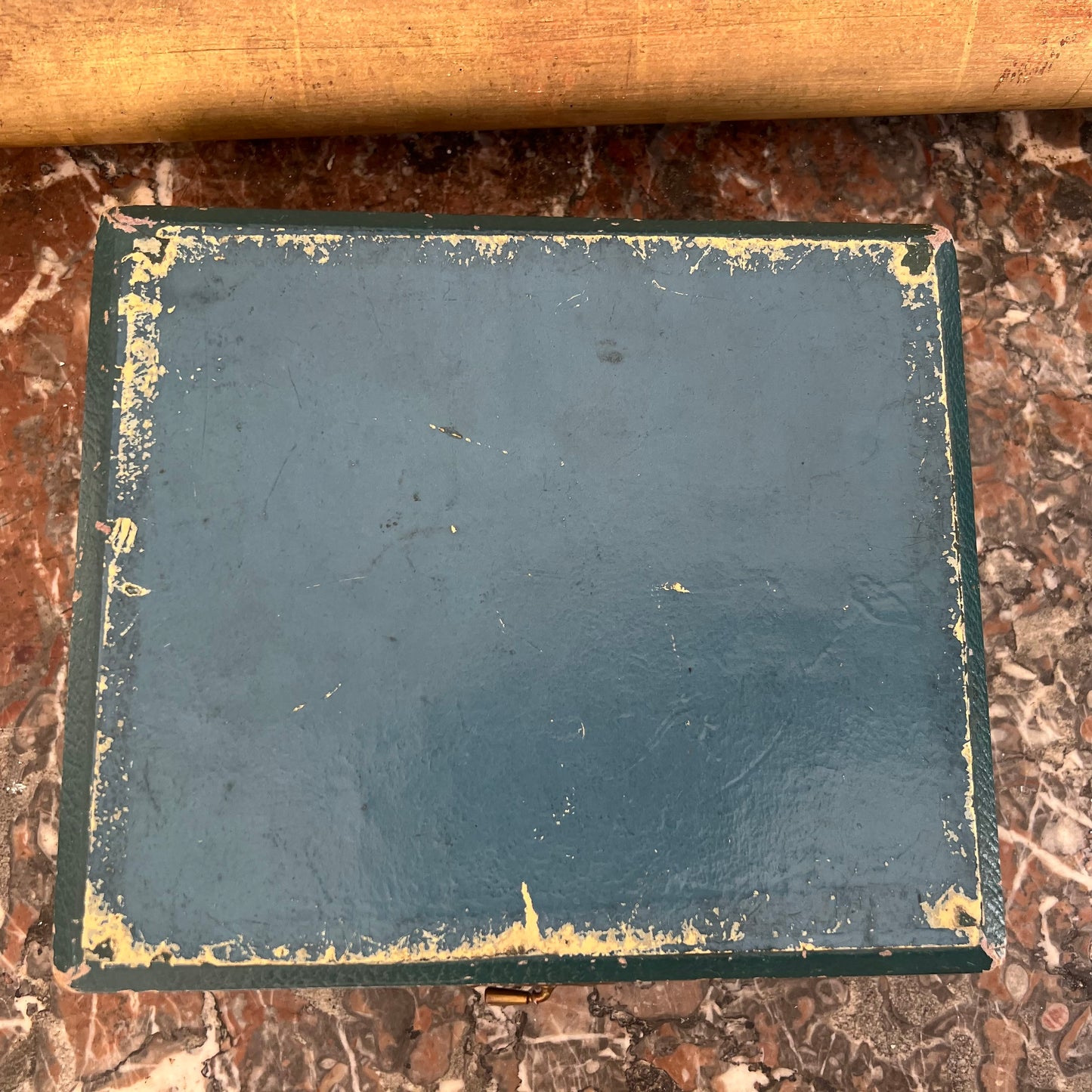
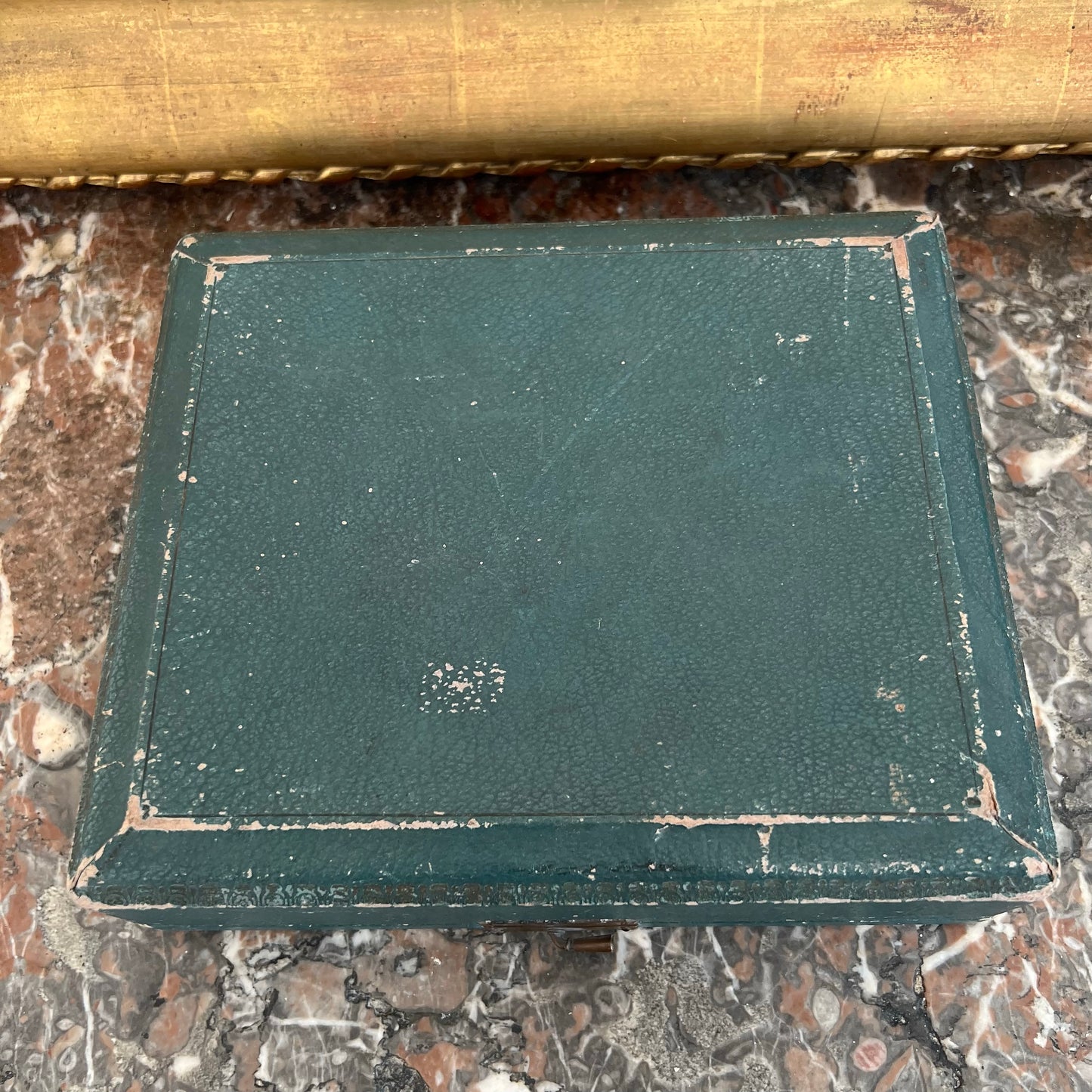
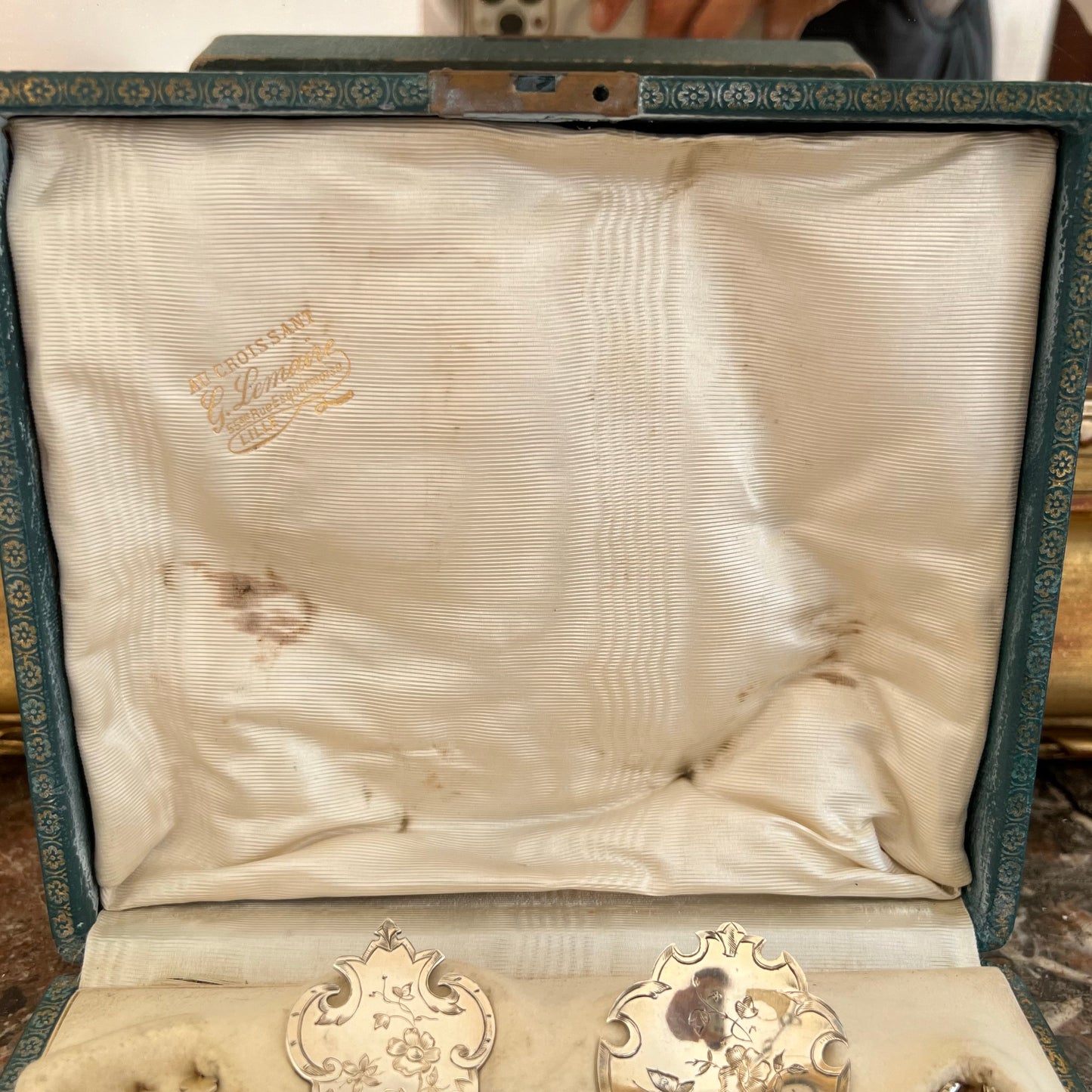
Box in used condition, with stains and tears
Out of stock
Couldn't load pickup availability
Description du bien
Description du bien
Composition du bien
Composition du bien
Etat du bien
Etat du bien
Poids & Dimensions
Poids & Dimensions
We'll tell you more:
Materials
- Vermeil:
Vermeil is a thin layer of gold applied to sterling silver.
Clad silver
Clad silver is a shell of sterling silver ‘clad’ with another material such as wax or resin. Widely used during the 20th century, it was often moulded and decorated with patterns.
- Silver-plated metal
Silver-plated metal is a goldsmithing technique that involves applying a layer of silver to base metal.
- The Minerva head hallmark
The Minerva head hallmark was introduced on 9 May 1838. It is used to mark silver items manufactured in France that have been tested using the wet method and recognised as being 950 thousandths (1st grade) or 800 thousandths (2nd grade) silver.
Minerva hallmark 1st fineness = 950 silver
Minerva hallmark 2nd fineness = 800 silver
- The Boar's Head hallmark
Boar's Head hallmark = Hallmark used between 1838 and 1973 for small silver items
- The Michelangelo Hallmark
The Michelangelo hallmark was stamped by the Paris Bureau on silver items recognised as 1st title (950 thousandths); introduced on 16 August 1819, it was abolished on 9 May 1838.
Michelangelo hallmark = 950 silver
- The Raphael head hallmark
The Raphael head hallmark was stamped by the Paris Assay Office on silver items recognised as 2nd title (800 thousandths); introduced on 16 August 1819, it was abolished on 9 May 1838.
Raphael's head hallmark = 800 silver
- The Facial Mask Hallmark
Facial mask hallmark = medium guarantee hallmark stamped on medium-sized silver items
Maintenance
No dishwasher, hand wash only